
Criminal Court Cases in Bradford County
Bradford County uses two trial-court levels. Circuit Court hears felonies. County Court hears misdemeanors, criminal traffic, DUI, and county or municipal ordinance cases. Florida abolished municipal courts, so Starke, Lawtey, and Hampton do not keep separate city criminal dockets. Their qualifying local matters go to Bradford County Court.
The Clerk of Circuit Court and Comptroller maintains both court levels. The court record begins when a charging document is filed and grows through motions, notices, hearings, orders, judgments, sentences, and financial entries. The sheriff or jail may supply an arrest or booking record, but neither office can certify what the court ultimately decided. A useful overview of the official online gateway appears at the Bradford Civitek access page.
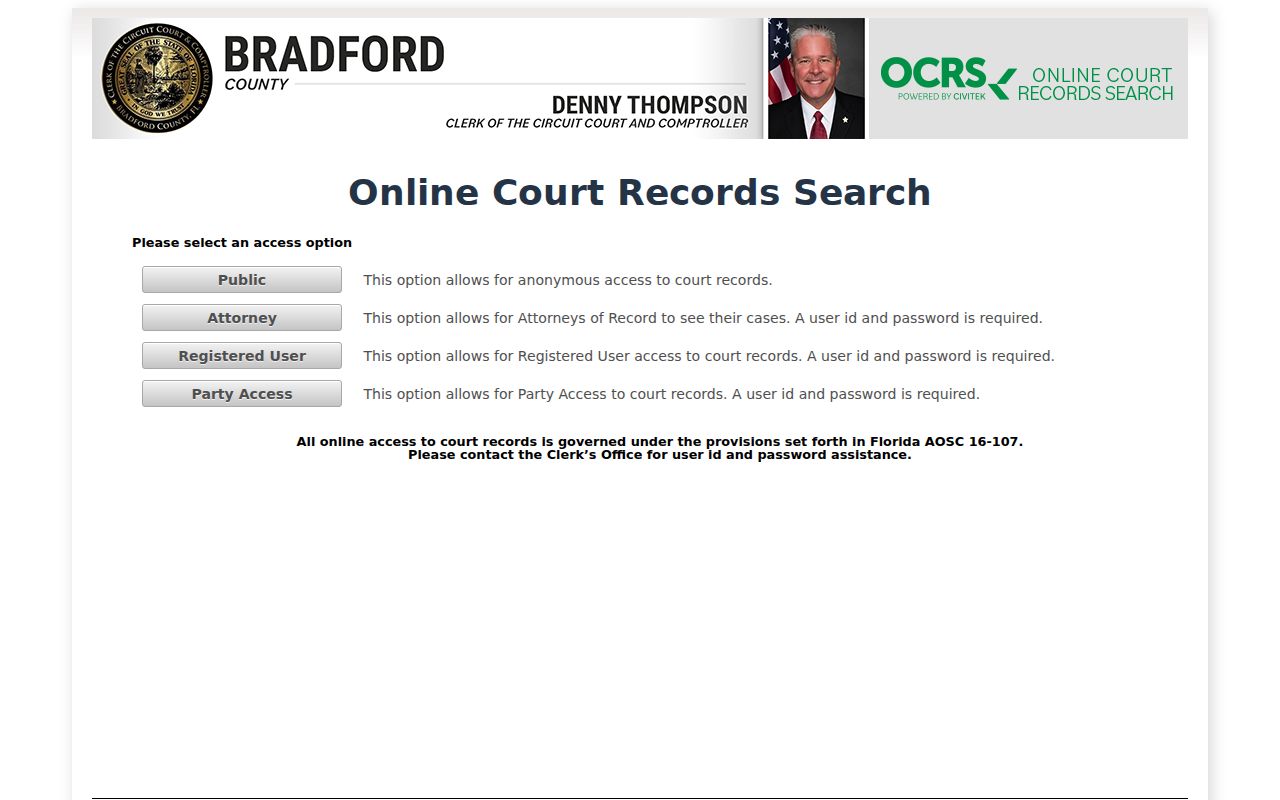
That landing page is the correct Bradford County trial-court entry point, rather than Florida’s appellate portal or a city court site.
Bradford Civitek Access Modes
Civitek separates access by role. Public access is anonymous. Attorney, Registered User, and Party Access require credentials and can expose different document views under Florida AOSC 16-107. The public landing is free, but the deeper search form depends on a live session. Its exact name fields, date filters, case-number format, and wildcard rules were not reliably available during research, so readers should follow the current labels rather than rely on guessed controls.
| Control | Access | Credentials | Use |
|---|---|---|---|
| Public | Anonymous | None | Start a public Bradford County case search |
| Attorney | Role based | ID and password | Attorney-of-record access |
| Registered User | Agreement based | ID and password | Approved registered access |
| Party Access | Case party | ID and password | Credentialed party view |
| Notice | All users | Not applicable | Explains AOSC 16-107 and clerk help |
The Clerk’s registration agreement explains the registered-user route.
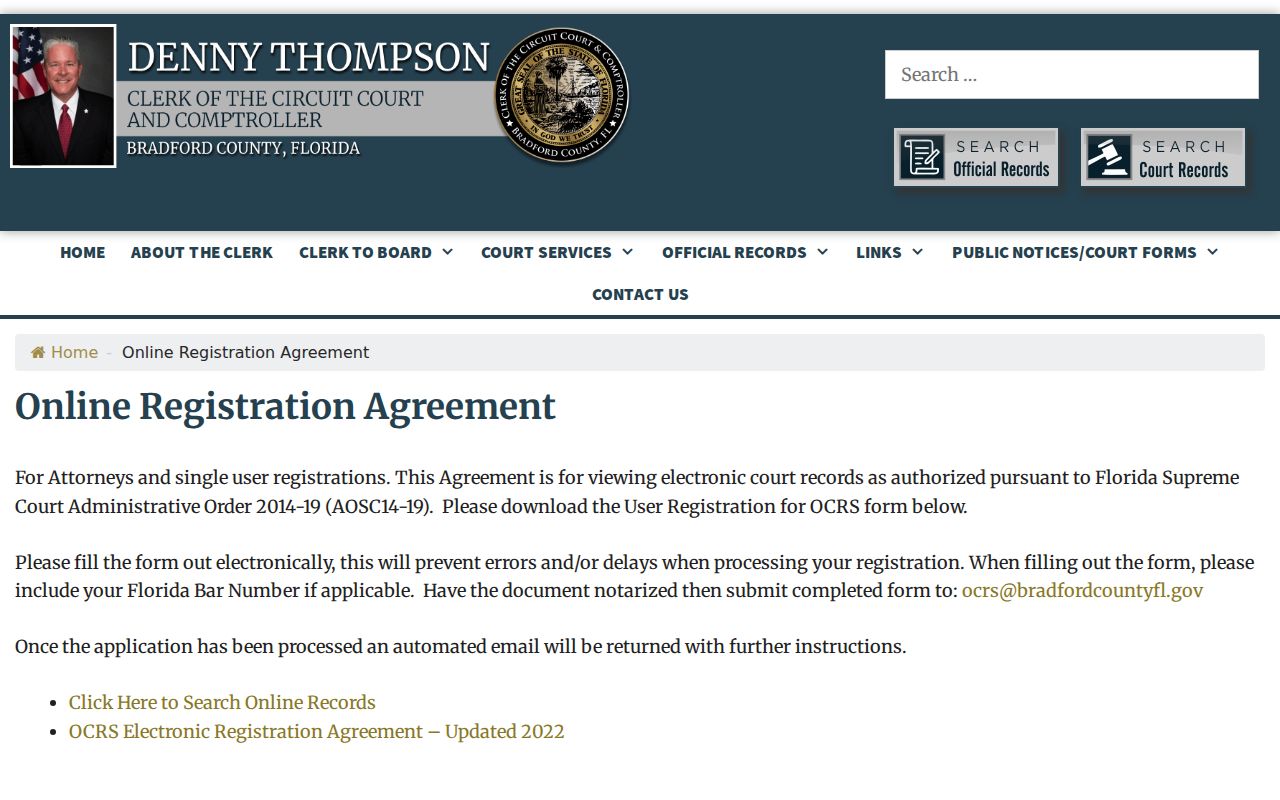
Registration does not convert a confidential record into a public one. Access still follows the user’s role and Florida court rules.
Bradford County Case Record Searches
Begin with the county-specific Civitek landing. Match more than a name whenever the live record provides enough context. Common names can point to the wrong person, and an arrest date may not equal the court filing date. When an online result is incomplete, the Clerk at the courthouse is the direct fallback.
- Open Bradford Civitek and choose Public for anonymous access.
- Use the live search labels and select the matching court or case result.
- Confirm the case number, court, party context, filed charges, and status.
- Read the docket in date order and identify the result for each count.
- Call, visit, or mail the Clerk for missing documents, older files, or a certified disposition.
The Clerk is at 945 N. Temple Avenue, Starke, FL 32091, with mailing address P.O. Drawer B. The office number is 904-966-6280, and published hours are weekdays from 8:00 a.m. to 5:00 p.m. A certified disposition is the sound choice when the exact court outcome matters.
When Bradford Documents Stay Hidden
A public case result may exist while a linked document does not display. That can reflect the user’s access role, a session issue, an older paper file, redaction, or a lawful confidentiality rule. It does not by itself prove the whole case is sealed. Contact the Clerk and identify the case number, party, court, and document sought. Ask whether a public copy, redacted copy, or certified copy is available.
Florida Rule of General Practice and Judicial Administration 2.420 governs judicial-record access. Rule 2.425 limits sensitive identifiers in filings. Social Security and account numbers, protected victim details, much juvenile material, and sealed or expunged records may be withheld or redacted. The custodian should apply the actual rule to the requested material rather than treating all court records as one category.
What a Criminal Case File Contains
A Bradford County criminal case file answers what prosecutors filed and what the court did. It is broader than a statewide rap sheet because it can include the sequence of hearings, motions, and orders. It is also distinct from SmartWEB, where a charge reflects jail intake and may change before filing.
| Case Number & Court | Identifies the Bradford Circuit or County Court file and division. |
|---|---|
| Charging Document | An information is a prosecutor’s formal charge; an indictment is a grand-jury charge. |
| Docket Entries | A dated list of filings, pleas, motions, notices, hearings, orders, and other events. |
| Hearing Dates | Scheduled or completed court events, subject to later changes. |
| Disposition & Judgment | The result for each count, such as guilt, acquittal, dismissal, or nolle prosequi. |
| Sentence & Conditions | Custody, probation, community control, fines, and court-ordered terms when imposed. |
A disposition means the result of a charge. Nolle prosequi means the prosecutor ended that charge. Adjudication withheld means the court did not formally adjudicate guilt after a plea or finding. These terms have different legal effects and should not be reduced to a simple “convicted” or “not convicted” label.
Bradford Court Charges and Counsel
The State Attorney for Florida’s Eighth Judicial Circuit decides whether and what to charge. The Bradford branch is in the courthouse at 945 N. Temple Avenue, with mailing at P.O. Box 779 and phone 904-966-6208. Published hours are Monday through Thursday, 8:30 a.m. to 5:00 p.m., and Friday, 8:30 a.m. to 4:00 p.m.
The State Attorney’s official location page confirms the Bradford office.
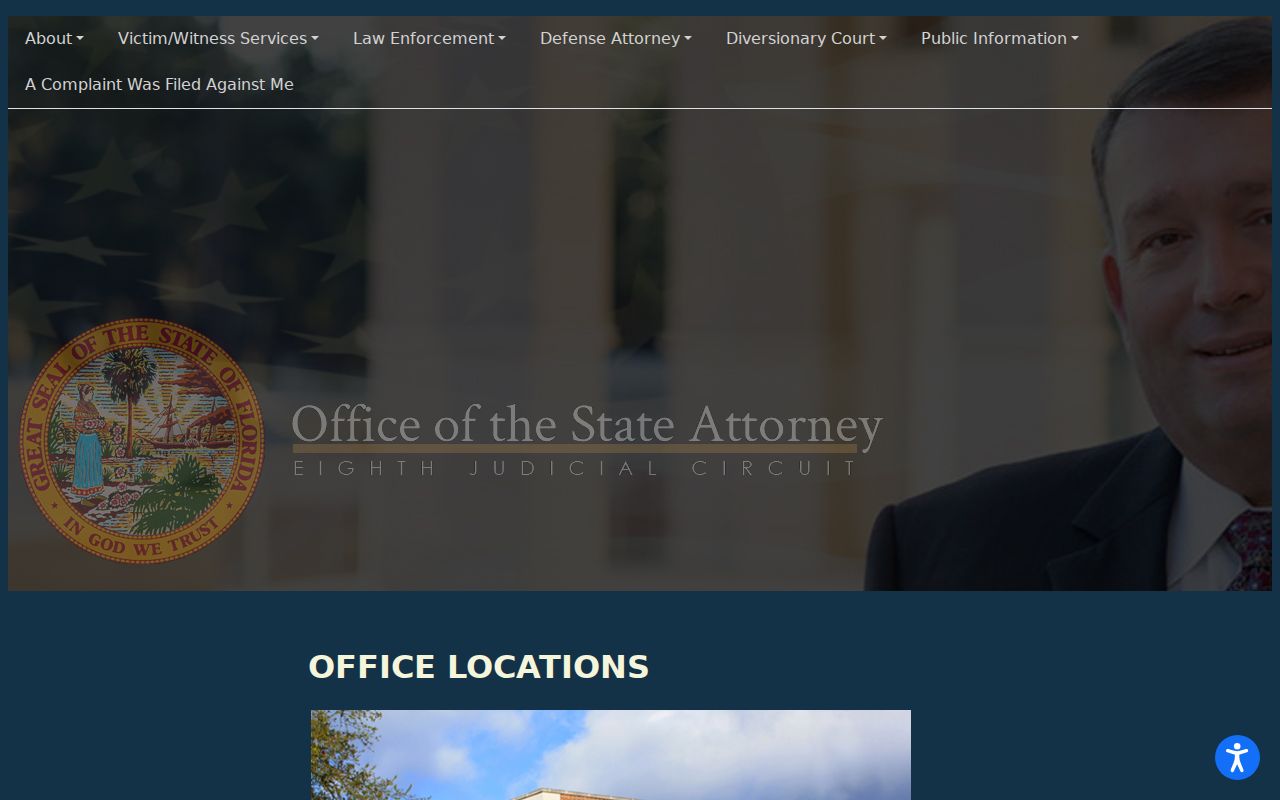
The prosecutor’s information can differ from the intake charge listed by the jail. The filed charge and later court disposition belong in the Clerk’s case file.
The Public Defender’s Starke branch serves the Bradford and Union divisions at the courthouse, P.O. Box 1059, Starke, FL 32091-1059, phone 904-966-6273. It represents eligible court-appointed clients, not the public at large as a records custodian. Its role remains important when reading docket entries for appointment and representation.
The Eighth Circuit Public Defender site describes the office’s service scope.
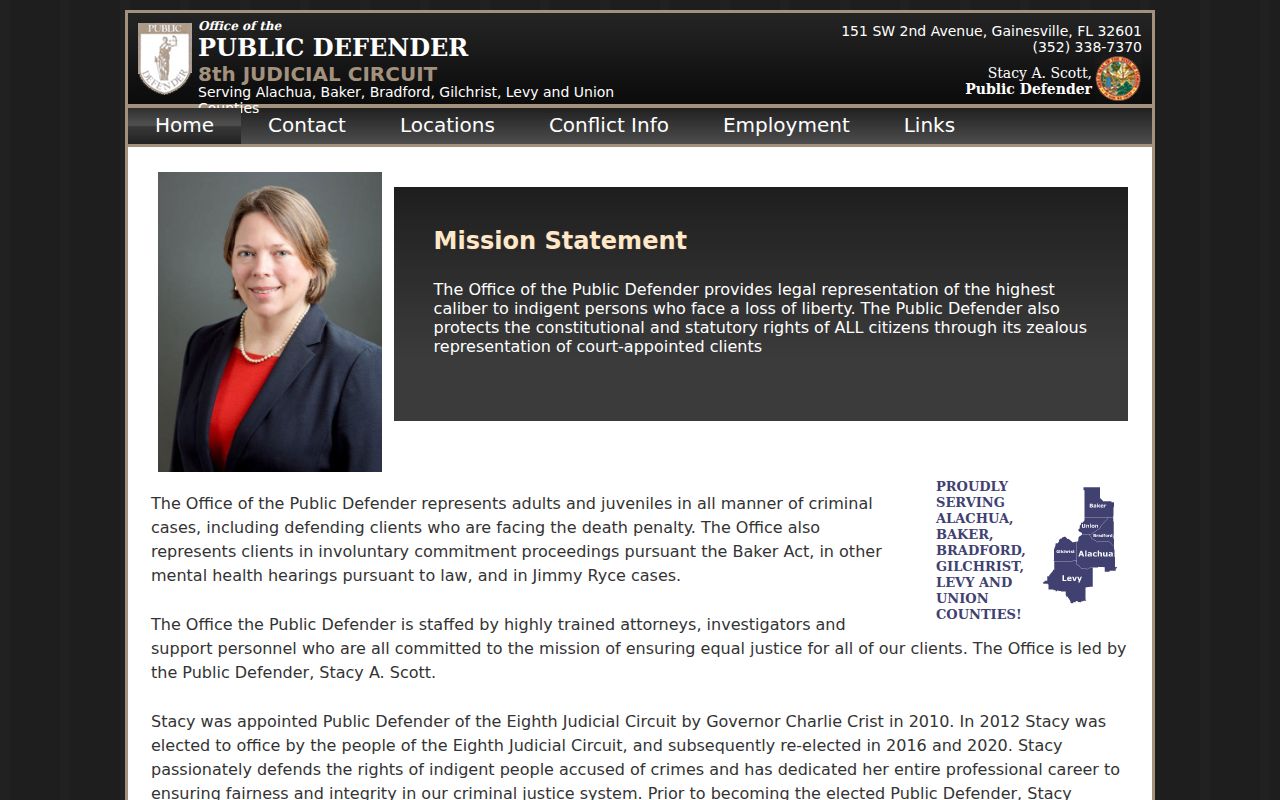
The official service page helps distinguish counsel functions from the Clerk’s duty to maintain the case record.
Criminal Case Stages in Bradford County
A case may start with arrest, a notice to appear, or another charging path. The prosecutor then evaluates the matter and may file, change, or decline charges. At arraignment, the accused enters a plea. Pretrial work can include discovery, motions, notices, hearings, and negotiations. A plea or trial can resolve the case, after which the court records the disposition and, when applicable, a sentence.
Case flow: Charges Filed › Arraignment › Pretrial › Plea or Trial › Disposition › Sentencing
Not every case reaches every stage. A count may be dismissed or ended by nolle prosequi. Some eligible cases may enter deferred prosecution under the Eighth Circuit’s 2024 policy. Diversion is discretionary, victim input is considered, and inability to pay cannot be the sole reason for exclusion or removal.
Certified Bradford Court Dispositions
A screen print is useful for finding the case. It is not the same as a certified disposition from the Clerk. Certification matters when a reader must establish the precise outcome, correct a missing state result, or document that one count ended differently from another. Ask the Clerk for the final disposition and identify every relevant count.
The Public Defender contact page also confirms the local Starke branch.
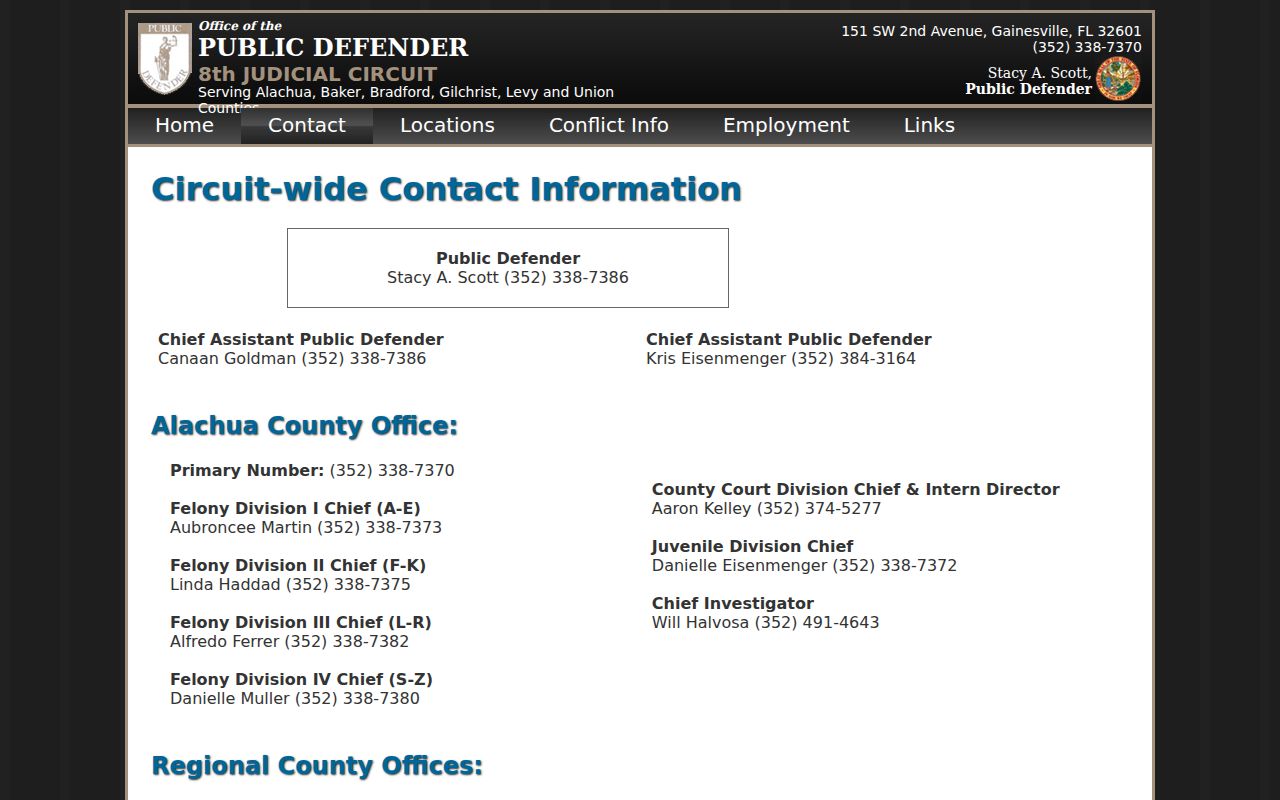
That contact is for representation matters. Record certification remains with the Bradford Clerk.
Reading Bradford Criminal Dockets
Read the docket from the first filing through the latest entry. A complaint reports an accusation. An information is the prosecutor’s charging paper. A capias directs arrest. Arraignment is the plea hearing. A motion asks the court to act, and an order records the court’s ruling. A violation affidavit can begin proceedings over probation or community control.
Check each count on its own. One may be dismissed while another ends in a plea or judgment. Also distinguish pending from disposed. Hearing notices can change, and a bond entry does not establish the final outcome. For custody status, use the jail. For the prosecution and sentence, use the Clerk. The broader Bradford County arrest search explains how the initial booking record fits before the court file.
Access Rules for Bradford Case Records
Florida Constitution article I, section 24 supports public access, but court files follow judicial access rules rather than the ordinary executive-agency request process alone. Rule 2.420 protects confidential judicial material, and Rule 2.425 requires sensitive data to be minimized. Sealed and expunged records, protected victim information, much juvenile material, and lawfully confidential filings may not appear in a public view.
If Civitek has no result, check spelling, venue, court level, and whether the case is federal or appellate. Bradford trial files are not in a single statewide trial-court database. Florida’s Appellate Case Information System covers the Supreme Court and district courts of appeal. Federal Bradford matters belong to the Middle District of Florida, Jacksonville Division. A missing Bradford disposition in an FDLE history should be addressed through FDLE Personal Review and the Clerk’s certified outcome, not by guessing from a booking entry.
Restrictions can also differ within one file. A docket line may remain public while the linked document is unavailable, or a released copy may omit protected details. Ask the Clerk whether access is blocked by a rule, an exemption, the user’s role, or a technical limit. For juvenile material, avoid broad claims that every record is secret or public. Florida law contains limited felony-level dissemination provisions, while transfer, diversion, sealing, and expunction can alter access. The custodian and the current governing rule provide the sound answer for the specific record.